What we work in
Three material families
Each one earns its place on performance first. The sustainability case follows, it does not lead.
48% of our volume
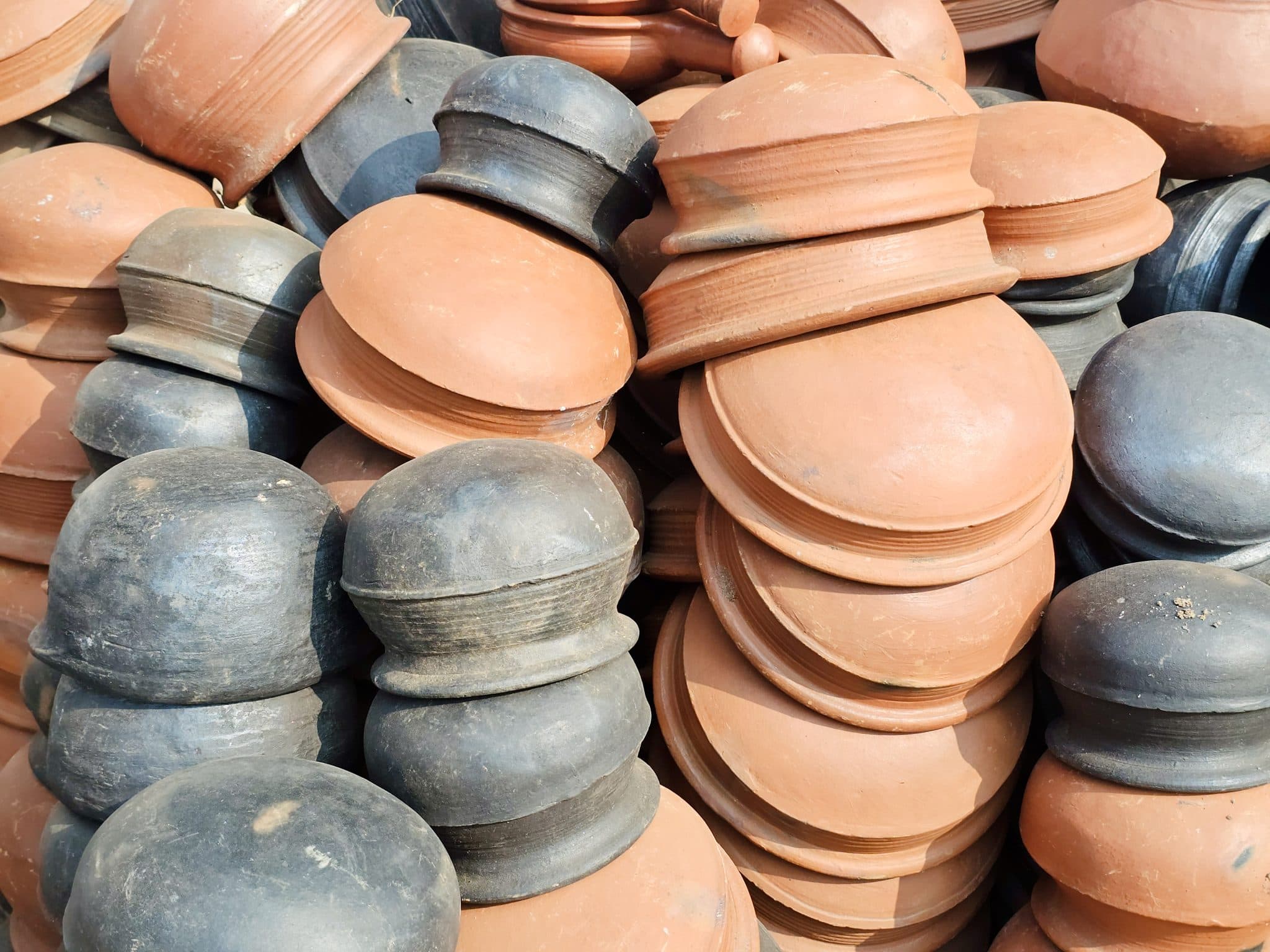
Terracotta
Local red and buff clay, wheel-thrown, slip-cast and hand-modelled, then kiln-fired to temperature in our own Neemrana and Molela workshops.
- Local red and buff clay bodies, dug within 60 km
- Wheel-thrown, slip-cast and press-moulded
- Bisque and glaze fired to 1,040–1,180°C
- Lead-free glazes; food-contact certification on tableware
Terracotta is porous unless glazed or sealed. Unglazed garden ware will patina and can spall if it is saturated then frozen — we freeze-test, but cannot warrant every climate.
9 stone types worked
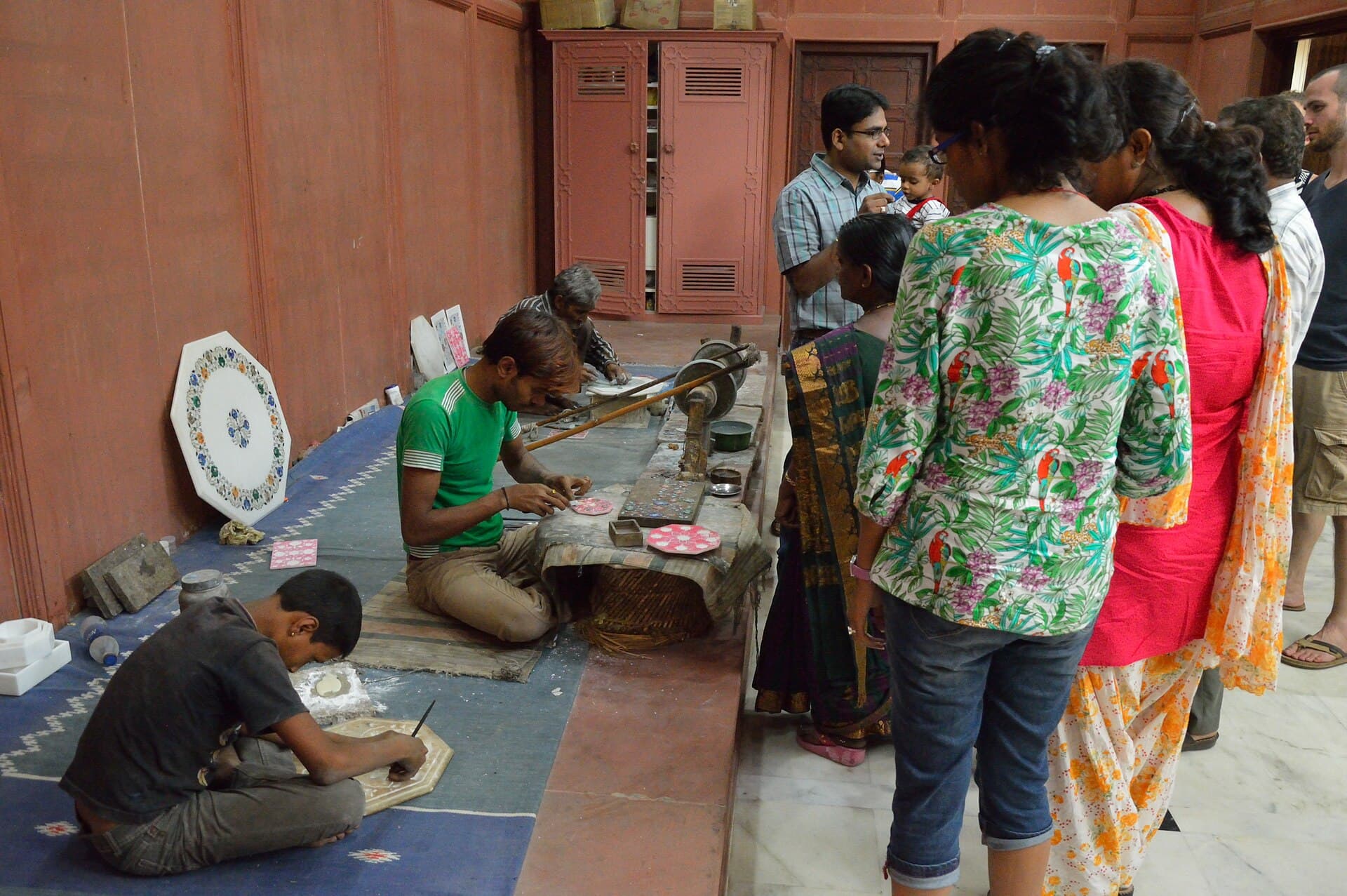
Marble
Makrana and Ambaji marble, soapstone and mixed-stone inlay, hand-cut and honed at our Kishangarh workshop. Natural material — veining and colour vary block to block.
- Makrana and Ambaji marble, soapstone, and mixed-stone inlay
- Hand-cut, turned and honed; matte or polished finish
- Natural stone — veining and colour vary block to block
- Cork or felt bases fitted as standard
Marble stains from oil and acid if left unsealed. We seal on request and supply care cards, but it is a natural material and it will age.
100% hand-painted
Paper Mache
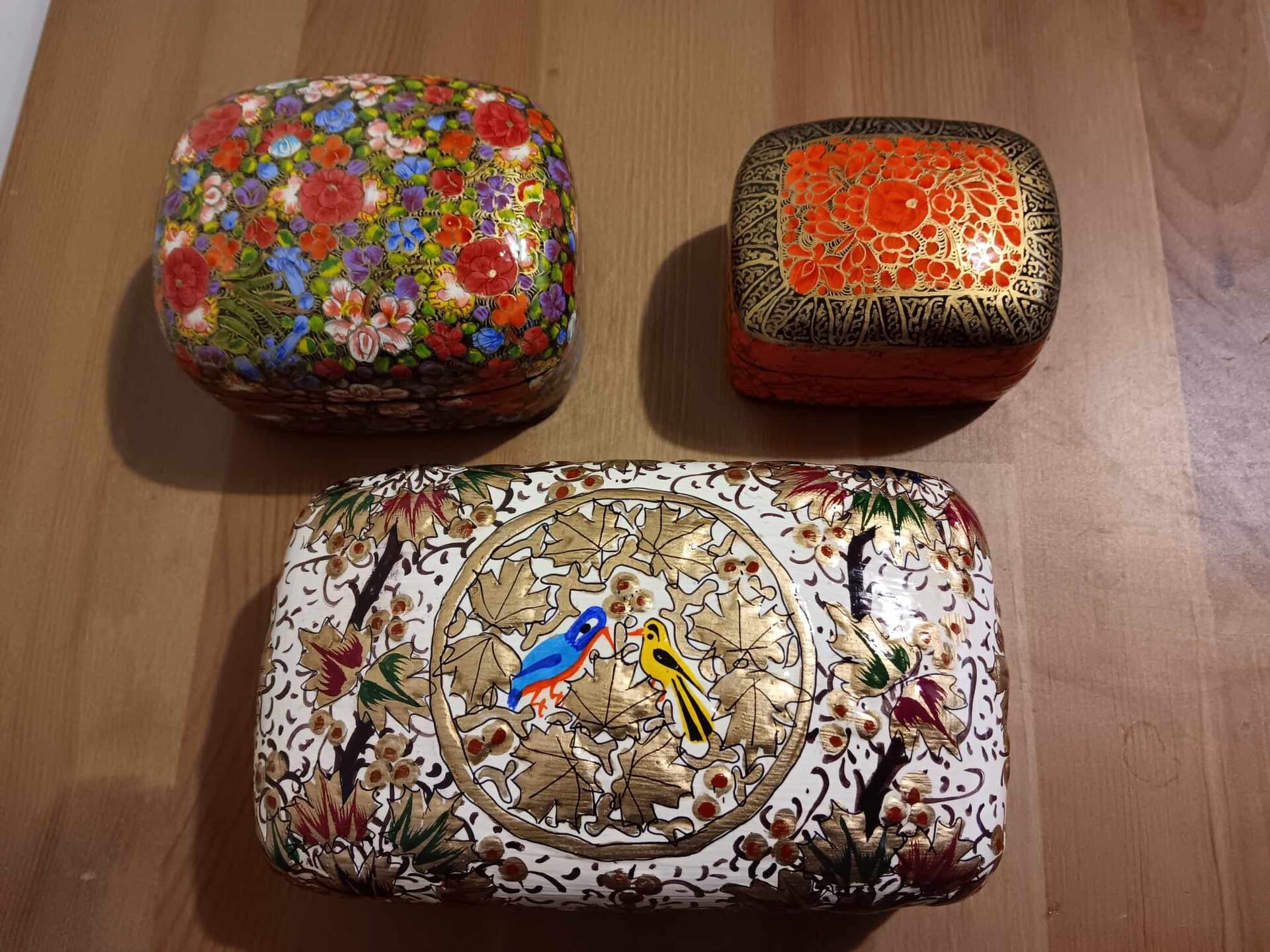
Moulded from recycled paper pulp over timber and metal formers, hand-painted in traditional Kashmiri and Jaipur motifs and sealed with clear lacquer.
- Moulded from recycled paper pulp over timber or metal formers
- Hand-painted in traditional Kashmiri and Jaipur motifs
- Sealed with clear lacquer; gold detailing on request
- Lightweight — ships at a fraction of stone weight
Paper mache is decorative, not structural or food-safe. Keep it dry; it is not suitable for outdoor or wet use.
Want a sample set?
One piece from each clay body, glaze and stone finish in a single crate. Charged at cost and credited against your first order.